
Last updated September 25, 2026
Seasonal ADU Care for San Bernardino: Year-Round Homeowner’s Guide
San Bernardino recorded 23 days above 105°F in summer 2023. A mini-split system that was not serviced before June operates at 15-20% reduced efficiency by August and fails at roughly twice the rate of serviced units by year three. That’s not a statistic from a marketing deck - it’s what we see in the field when homeowners skip the April maintenance window.
This guide is organized around the four climate events that actually drive ADU damage in San Bernardino: pre-summer heat loading, Santa Ana wind and fire season, winter freeze risk in the foothills, and wet-season drainage verification. Generic Inland Empire advice misses these windows because it treats the region as flat and uniform. San Bernardino is neither. The city spans from 1,000 feet to over 3,000 feet in the foothill neighborhoods above Highland Avenue, and your maintenance schedule should reflect where your ADU sits on that gradient.
You’ll learn what to inspect, when to do it, and how to document it in a format that supports warranty claims and future refinancing appraisals - or see our ADU Design & Permitting Maintenance Checklist for San Bernardino Homeowners for a printable version. Every recommendation is drawn from projects we’ve permitted and built since 2015.
Quick Answer
San Bernardino ADU maintenance follows four distinct seasonal cycles: pre-summer HVAC and ventilation service (April-May), Santa Ana season fire-hardening (September-November), winter freeze protection for foothill ADUs above 1,500 feet (December-February), and wet-season drainage verification against the approved grading plan (March and October). Document each inspection with dated photos and notes; this log becomes evidence for warranty claims and appraisal support.
Table of Contents
- Pre-Summer Checklist: April-May
- Santa Ana Season: September-November
- Winter Freeze Protection for Foothill ADUs
- Wet-Season Drainage Verification
- The Maintenance Log: Documentation That Protects Your Investment
- Special Considerations for Prefab and Modular ADUs
- Common Mistakes to Avoid
- When to Call a Professional
- Frequently Asked Questions
Pre-Summer Checklist: April-May
The pre-summer window is the most consequential maintenance period for San Bernardino ADUs. By late May, daytime temperatures in the valley floor regularly cross 95°F. The thermal mass of concrete slab and wood framing absorbs that heat and radiates it inward through June and July. An ADU that is not prepared in April will run harder, cost more to cool, and experience accelerated wear on every mechanical system.
We recommend a three-part inspection, completed by Memorial Day:
- Mini-split service and filter verification. Have a licensed HVAC technician clean the evaporator coils, verify refrigerant charge, and test the condensate drain. In San Bernardino’s hard water and dust environment, coils foul faster than in coastal climates. A system running 15% below spec in June will run 25% below spec by August as dust accumulation compounds. Ask the technician to record the suction and discharge pressures; this baseline helps diagnose problems next year. If your ADU uses a ducted heat pump instead of a mini-split, add duct leakage testing to this step - the temperature differential between attic and conditioned space in San Bernardino attics exceeds 40°F on summer afternoons, and leaky ducts pull that heat directly into the living space.
- Attic ventilation verification. The 2022 California Energy Code requires minimum attic ventilation ratios, but many ADUs - especially garage conversions with low-slope roofs - were built to older standards or have had vents blocked by insulation contractors. Verify that soffit vents are clear, ridge vents are intact, and any gable vents are screened. In wood-frame ADUs, attic temperatures above 150°F degrade asphalt shingle adhesive and accelerate rafter checking. We’ve replaced prematurely failed roofs in Del Rosa and Arrowhead neighborhoods where attic ventilation was the root cause, not the roofing material.
- Exterior caulk inspection at UV-stressed joints. San Bernardino’s UV index in summer rivals Phoenix. Acrylic latex caulk that looked fine in March will crack by September if it was applied without backer rod or primer on wood-frame ADUs. Inspect at window perimeters, door thresholds, and the joint between siding and foundation. On south and west elevations, pay particular attention to the caulk line where the roof fascia meets the wall - this is the first joint to fail and the last one homeowners notice until water stains appear on the interior. Use a paintable silicone or high-performance polyurethane caulk for resealing; the extra material cost is recovered in the first year of avoided air infiltration.
For garage conversion ADUs in San Bernardino, add a fourth step: verify that the existing slab has a vapor barrier beneath it or that a surface-applied moisture mitigation system was installed during conversion. Summer heat drives moisture upward through unprotected slabs, and the resulting efflorescence is often mistaken for plumbing leaks.
Santa Ana Season: September-November
The Santa Ana wind pattern defines San Bernardino’s fall. Dry, heated air descends from the high desert, relative humidity drops into single digits, and sustained winds of 40-60 mph are common. In October 2019, the Hillside Fire in North Park started from a smoldering ember traveling more than a mile. The ADU maintenance priority in this season is ember resistance and defensible space - not just for the main house, but measured specifically from the ADU structure.
Here’s the inspection sequence we use on our own projects:
- Ember-resistant vent screens. Standard 1/4-inch mesh screens will stop birds and rodents. They will not stop embers. Replace all foundation vents, eave vents, and gable vent screens with 1/8-inch corrosion-resistant mesh. This is California Building Code Chapter 7A in wildland-urban interface zones, but we recommend it for all San Bernardino ADUs regardless of WUI designation - ember travel does not respect zone boundaries. On prefab units from brands like Abodu or Cover, verify that the factory-installed vent screens meet this specification; some early production runs used larger mesh that meets general code but not ember-resistant standards.
- Defensible space measured from the ADU, not the main house. Cal Fire guidelines specify Zone 0 (0-5 feet), Zone 1 (5-30 feet), and Zone 2 (30-100 feet) measured from each structure. An ADU set behind a main house often has its Zone 0 and Zone 1 overlapping with the main house’s Zone 2 - which means it receives less attention. Walk the perimeter of the ADU specifically. Remove leaf litter from roof valleys and gutters. Relocate firewood, propane tanks, and combustible storage to beyond 30 feet from the ADU walls. In the foothill neighborhoods above Base Line Road, where many of our new detached ADUs in San Bernardino are sited, this step is non-negotiable.
- Dryer vent clearance and lint removal. The combination of lint accumulation and Santa Ana winds creates a concentrated ignition source. Verify that the dryer vent terminates with a backdraft damper (not a louvered cover that can stick open) and that the duct run is metal, not flexible transition hose. Clean the full duct run annually; in rental ADUs, require tenants to report extended drying times as a maintenance trigger.
- Roof and gutter condition. Remove accumulated debris before the first Santa Ana event. On composition shingle roofs, check for lifted tabs that could detach in high wind. On standing-seam metal roofs (common on Mighty Buildings units and other prefab systems), verify that panel clips are secure and that no fasteners have backed out from thermal cycling.
Document this inspection with dated photos of each vent screen, the defensible space perimeter, and the dryer vent termination. These photos are your evidence if an insurance claim arises.
Winter Freeze Protection for Foothill ADUs
San Bernardino’s valley floor rarely freezes. The foothills above 1,500 feet - neighborhoods like Devore Heights, Verdemont, and the upper reaches of North Park - experience hard freezes several nights each winter. ADUs in these areas need winterization that valley-floor owners can skip. The cost of a single freeze-break incident in an ADU with PEX plumbing typically runs $3,800-$7,200 in water damage remediation, not including the deductible.
Our winter checklist for foothill ADUs:
- Pipe insulation at all exterior walls and crawl spaces. Use closed-cell foam insulation with a minimum R-4 rating on hot and cold lines. In crawl spaces, insulate the rim joist area where pipes enter the conditioned envelope - this is the most common freeze point in raised-floor ADUs.
- Hose bib covers and interior shut-off valves. Remove garden hoses, drain the bib, and install an insulated cover. Better: verify that the ADU has interior shut-off valves for exterior bibs, and close them for the season. Many garage conversion ADUs retain the original garage hose bib without winterization; this is a liability if the tenant uses it in January.
- HVAC heat-strip verification. Heat pumps lose efficiency below 40°F. The auxiliary heat strip (electric resistance backup) should activate automatically. Have a technician verify that the heat strip energizes and that the defrost cycle operates correctly. A heat pump running in defrost without functional backup heat will blow cold air into the unit and trigger tenant complaints - or tenant space heater use, which creates its own fire risk.
- Thermostat programming for minimum setpoint. Program a minimum 55°F setpoint, even when the ADU is unoccupied. The incremental energy cost is trivial compared to a freeze-break repair. For rental ADUs, this should be written into the lease with a clause allowing landlord access to verify settings.
If your ADU is a new design-build project in San Bernardino, we specify frost-protected shallow foundations or slab-on-grade with perimeter insulation for foothill sites. The permit set includes these details; verify that they were constructed as drawn. Under Haven Standard Clause 5, the documented photo record from construction should show the insulation placement - compare it to what you see now.
Wet-Season Drainage Verification
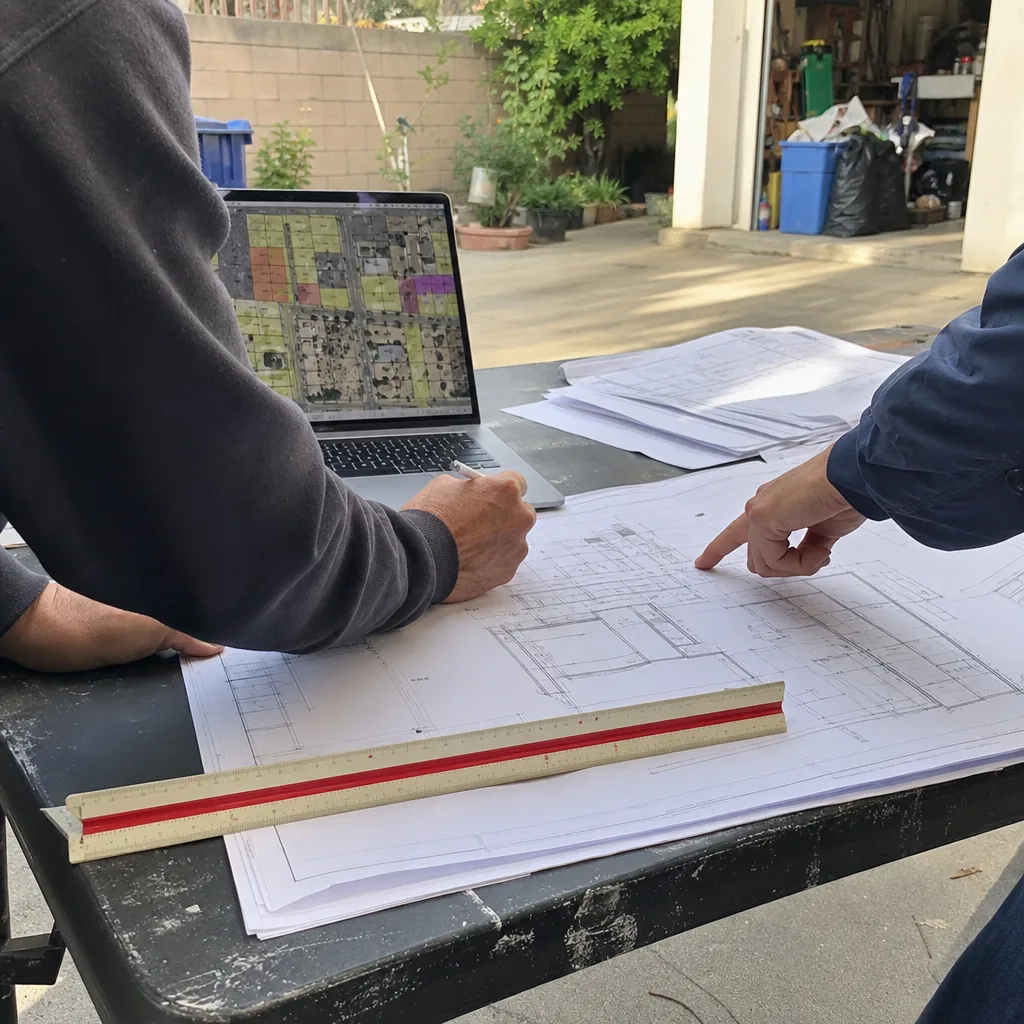
San Bernardino receives most of its annual precipitation between December and March, with a secondary peak from summer monsoon thunderstorms. The approved drainage plan for your ADU - the grading and drainage sheet in the permit set - specifies swale locations, downspout discharge points, and surface slope percentages. Wet-season maintenance means verifying that the built condition still matches the approved plan.
This matters for three reasons. First, erosion or landscaping changes can redirect water toward the ADU foundation. Second, undocumented drainage alterations can void warranty coverage or complicate future sale disclosures. Third, a documented annual verification protects you if a neighbor’s upstream alteration causes flooding - you have evidence that your drainage was maintained as approved.
The verification process:
- Locate the approved grading and drainage plan. This is part of the permit set, typically sheet G-001 or G-002. If you do not have a copy, request it from the city of San Bernardino Building & Safety Division or from your design-build contractor. At Ellery, every client receives a complete digital permit set at project closeout.
- Walk the site during active rain. Observe water flow patterns. Water should sheet-flow away from the ADU foundation toward approved discharge points - typically a city storm drain, a percolation trench, or a landscaped swale. Standing water within 10 feet of the foundation for more than 24 hours after rain stops indicates a drainage problem.
- Verify downspout extensions and splash blocks. Downspouts should discharge at least 6 feet from the foundation or connect to underground drainage. Extensions get kicked aside by landscapers, stolen by tenants, or crushed by vehicles. Replace missing or damaged extensions before the next rain event.
- Check swale depth and vegetation. Swales should maintain their designed depth and cross-section. Over time, mulch, leaf litter, and soil migration reduce capacity. In San Bernardino’s chaparral environment, swales also become fire pathways if overgrown with dry grass - clean them in fall for Santa Ana season, then verify again in spring for drainage function.
- Photograph and annotate. Take dated photos from the same locations each year. Note any changes from the approved plan, even if they appear benign. A planter bed installed by a tenant can block a swale and create hydrostatic pressure on the foundation.
For Ellery ADU Studio San Bernardino projects, the 365-Day Done Right Promise includes drainage function verification at the one-year walkthrough. After that, the homeowner assumes this inspection. We provide the permit set and a photo baseline from construction to support your ongoing documentation.
The Maintenance Log: Documentation That Protects Your Investment
A maintenance log is not a spreadsheet for enthusiasts. It is a financial document. When you refinance, sell, or file a warranty claim, the log demonstrates that you maintained the asset as required. Appraisers and underwriters increasingly request maintenance documentation for accessory structures, particularly ADUs with rental income.
We recommend a simple format, updated quarterly:
| Date | Season/Trigger | Inspection Item | Condition Found | Action Taken | Photo File Name | Vendor/Technician |
|---|---|---|---|---|---|---|
| 4/15/2024 | Pre-summer | Mini-split service | Coils fouled, refrigerant 8% low | Cleaned, charged, baseline pressures recorded | 2024-04-15-HVAC-01.jpg | [HVAC contractor name] |
| 9/30/2024 | Santa Ana | Ember vent screens | One screen corroded at corner | Replaced with 1/8″ SS mesh | 2024-09-30-VENT-01.jpg | Self |
Store the log and photos in cloud storage with date-stamped filenames. Email a copy to yourself annually for an additional timestamp. If you use property management software, attach the log to the property file.
For rental ADUs, require tenants to report maintenance triggers (extended dry times, unusual HVAC noise, water intrusion) in writing. This creates a paper trail that protects both parties.
Special Considerations for Prefab and Modular ADUs
Prefab and modular ADUs from brands like Abodu, Cover, and Mighty Buildings arrive with factory warranties and standardized maintenance schedules. These schedules assume moderate California coastal climates. San Bernardino’s conditions require adaptation.
Abodu units use a proprietary wall assembly with integrated mechanical chase. The chase must remain accessible for service; do not build planter beds or storage against the access panels. Summer heat in the chase can degrade low-voltage wiring if ventilation is blocked.
Cover units employ a high-performance envelope with minimal thermal bridging. This performs excellently in San Bernardino’s temperature swings, but the airtightness requires mechanical ventilation to run continuously. Verify that the ERV (energy recovery ventilator) filters are changed per schedule - more frequently in dusty conditions.
Mighty Buildings units use a composite panel system with factory-applied finish. Inspect panel seams annually for sealant degradation; the thermal expansion coefficient of the composite differs from conventional stucco, and seam movement is more pronounced. Do not apply conventional elastomeric coatings over the factory finish without manufacturer approval.
At Ellery, we coordinate these manufacturer requirements within our single-contract scope. The permit set integrates factory drawings with site-specific conditions, and the Haven Standard documentation includes a prefab-specific maintenance supplement. If you purchased your unit through another contractor, request the factory maintenance manual and cross-reference it against this guide.
Common Mistakes to Avoid
- Treating the ADU like the main house. ADUs have smaller mechanical systems, tighter envelopes, and different occupancy patterns. A maintenance schedule copied from your primary residence will miss ADU-specific vulnerabilities, especially in San Bernardino’s climate extremes.
- Skipping the April HVAC service because the system “looks fine.” By the time a mini-split shows visible distress in San Bernardino summer, the compressor is already operating outside safe parameters. The $180-$280 preventive service cost avoids the $2,400-$4,800 compressor replacement.
- Measuring defensible space from the main house only. Insurance adjusters and fire inspectors measure from each structure. An ADU with inadequate clearance is a total loss exposure, even if the main house survives.
- Ignoring elevation-based freeze risk. San Bernardino’s 1,000-foot elevation contour runs through the city. ADUs above this line need winterization that valley-floor owners skip. Check your elevation on USGS topo maps, not assumptions.
- Altering drainage without permit review. Adding a patio, regrading for landscaping, or redirecting downspouts without checking the approved drainage plan can create liability. The city of San Bernardino requires drainage plan revision for significant alterations.
- Failing to document. Warranty claims, insurance disputes, and refinancing appraisals all require evidence. “I did the maintenance” is not evidence. Dated photos and a written log are.
- Using generic Inland Empire advice without San Bernardino specificity. Riverside’s maintenance priorities differ from San Bernardino’s. Corona does not have foothill freeze zones. Rancho Cucamonga’s wind patterns are distinct. Local specificity matters for both performance and compliance.
When to Call a Professional
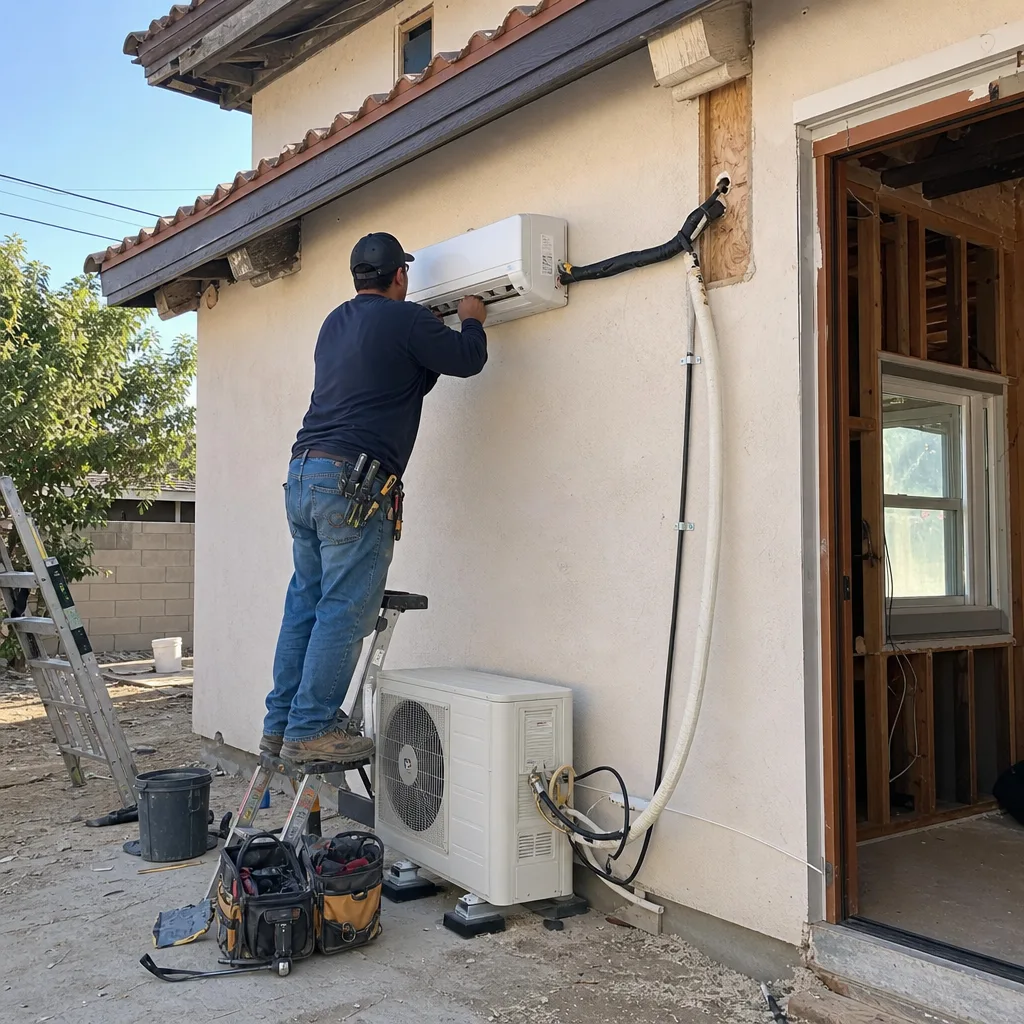
Some maintenance tasks belong to homeowners. Others require licensed technicians or design-build expertise. Call a professional when:
- HVAC pressures, refrigerant charge, or electrical testing is required
- Foundation drainage patterns have changed and regrading is necessary
- Roofing or flashing repairs exceed a single shingle replacement
- Plumbing freeze damage has occurred, even if “minor” - hidden splits in PEX can fail months later
- You need to verify that built conditions match the approved permit set
Ellery ADU Studio San Bernardino offers free estimates for maintenance assessments, drainage verification, and permit set review. We also provide a Free Second Opinion on any written estimate you have in hand from another contractor - compare scope, pricing, and documentation standards before you commit - and publish more guides & resources monthly. Call (909) 359-6463 to schedule.
Frequently Asked Questions
Annual maintenance for a typical San Bernardino ADU runs $680-$1,400, depending on elevation, system complexity, and whether you self-perform or hire technicians; see our ADU Cost Breakdown: The San Bernardino Homeowner’s Reference for 2026 for deeper pricing context. This includes HVAC service ($180-$340), gutter cleaning ($120-$200), and drainage inspection ($0 if self-performed, $280-$520 if professional). Major items like roof repair or drainage regrading are additional. Call (909) 359-6463 for an exact quote on your specific ADU - estimates are free.
Under Haven Standard Clause 1, every Ellery project is quoted with a written price before any work begins. The scope is locked at signing. No door-side upsells, no scope creep. If we find concealed conditions during maintenance assessment, we document them, explain the finding, and provide a revised written scope before proceeding. You approve every dollar.
Verify drainage function twice yearly: once in March after the winter rain peak, and once in October before the winter season. Walk the site during active rain if possible. Compare conditions to the approved grading and drainage plan. Photograph and log. This rhythm catches erosion from summer heat and landscaping changes before they become foundation problems.
Yes. Garage conversion ADUs in San Bernardino often retain original slab conditions, roof structures, and utility connections that differ from new construction. They need specific attention to vapor barrier performance, attic ventilation adequacy, and electrical panel capacity. Detached ADUs have independent systems but require defensible space measurement from all sides. Our garage conversion ADU service in San Bernardino includes a maintenance assessment at project closeout that identifies these legacy conditions.
Hard freeze risk becomes significant above 1,500 feet in the San Bernardino foothills. Between 1,000 and 1,500 feet, implement moderate precautions: hose bib covers and minimum thermostat setpoints. Above 1,500 feet, full winterization including pipe insulation, heat-strip verification, and tenant education is warranted. Check your exact elevation at the USGS National Map; do not rely on neighborhood generalizations.
Lenders and appraisers increasingly treat ADUs as income-producing assets requiring documented maintenance. A complete log demonstrates asset stewardship, supports warranty claims, and justifies valuation. For FHA and conventional loans with ADU rental income, underwriters may request evidence of structural and systems maintenance. The log format in this guide is designed for this purpose.
The Bottom Line
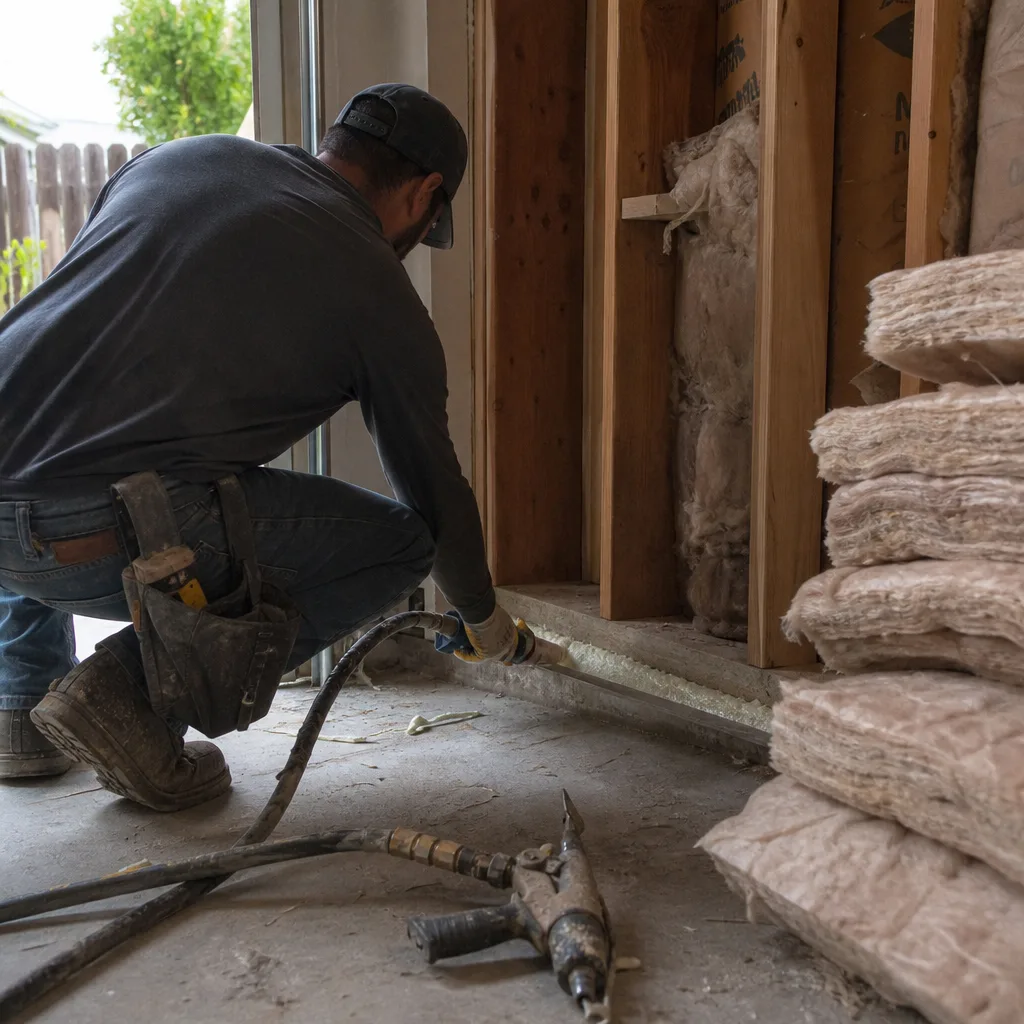
San Bernardino’s climate demands a maintenance calendar built around four specific events: pre-summer heat loading, Santa Ana wind and fire exposure, foothill freeze risk, and wet-season drainage verification. Generic advice fails because it ignores the city’s elevation gradient, wind patterns, and UV intensity. Document every inspection with dated photos and a written log. This practice protects your warranty coverage, supports your property’s financial value, and catches small problems before they become four-figure repairs. The homeowners who maintain their ADUs methodically are the ones who still own them, still rent them, and still refinance them a decade later.
Written by Nadia Ellery, Owner at Ellery ADU Studio San Bernardino, serving San Bernardino since 2015.